How to Start an Electrical Shop in 2026: A Honest Guide
Read this honest guide on investment, profit margins, and avoiding scams. Source genuine products from Rastogi Electricals in Bhagirath Palace Electrical Market.
The Spark You’ve Been Waiting For
If you are living in a developing town in India- think Moradabad, Bidasar, or Siliguri—you’ve likely noticed one thing: construction is everywhere. Every new "pucca" house, every renovated shop, and every new floor added to a family home requires wires, switches, and lights.
In 2026, the Indian retail market is projected to reach massive heights, driven by urbanization in Tier 2 and 3 cities. Starting a retail electrical shop now isn't just a business idea; it’s a way to ride the infrastructure wave of a growing Bharat.
But we know you have questions: How much money do I need? Where should I buy stock? How do I not get cheated in big markets like Delhi?
At Rastogi Electricals, we meet dozens of people like you every week at our shop in Bhagirath Palace. We wrote this guide so you don’t have to learn the hard way. Here is the truth about starting an electrical business in India today.
Is the Electrical Business Profitable in 2026?
The short answer: Yes, if you buy right.
The electrical business is recession-proof. People might delay buying a new car, but they won't delay fixing a short circuit or installing lights in a new home.
Retail Margins: You can expect 10% to 40% profit depending on the item.
Wires & Cables: Lower margin (3-5%) but high volume. They bring customers in.
Switches & Accessories: Good margin (15-25%).
LED & Fancy Lighting: High margin (30-40%+).
The Trap: Many new shopkeepers fail because they buy "duplicate" cheap items to get higher margins.
When those products fail, your customer never comes back. Trust is your only currency in a small town.
2. Gaining Knowledge: "I Don't Know Anything About Electrical Products!"
You don't need to be an engineer to start this business, but you do need to be smart. You cannot sell what you do not understand.
The "Guru" Strategy: Hire a Local Electrician Before you even open your shutters, hire an experienced local electrician for a few weeks or keep them on a retainer. They are your "boots on the ground."
Why? They know exactly what sells in your specific colony or town.
Ask them: "Which brand is moving fast here? Anchor or a local brand?", "What price are customers actually paying for a 9W LED bulb?", "Show me the difference between a heavy copper wire and a light one."
This small investment in their salary will save you lakhs in "dead stock" (items that never sell).
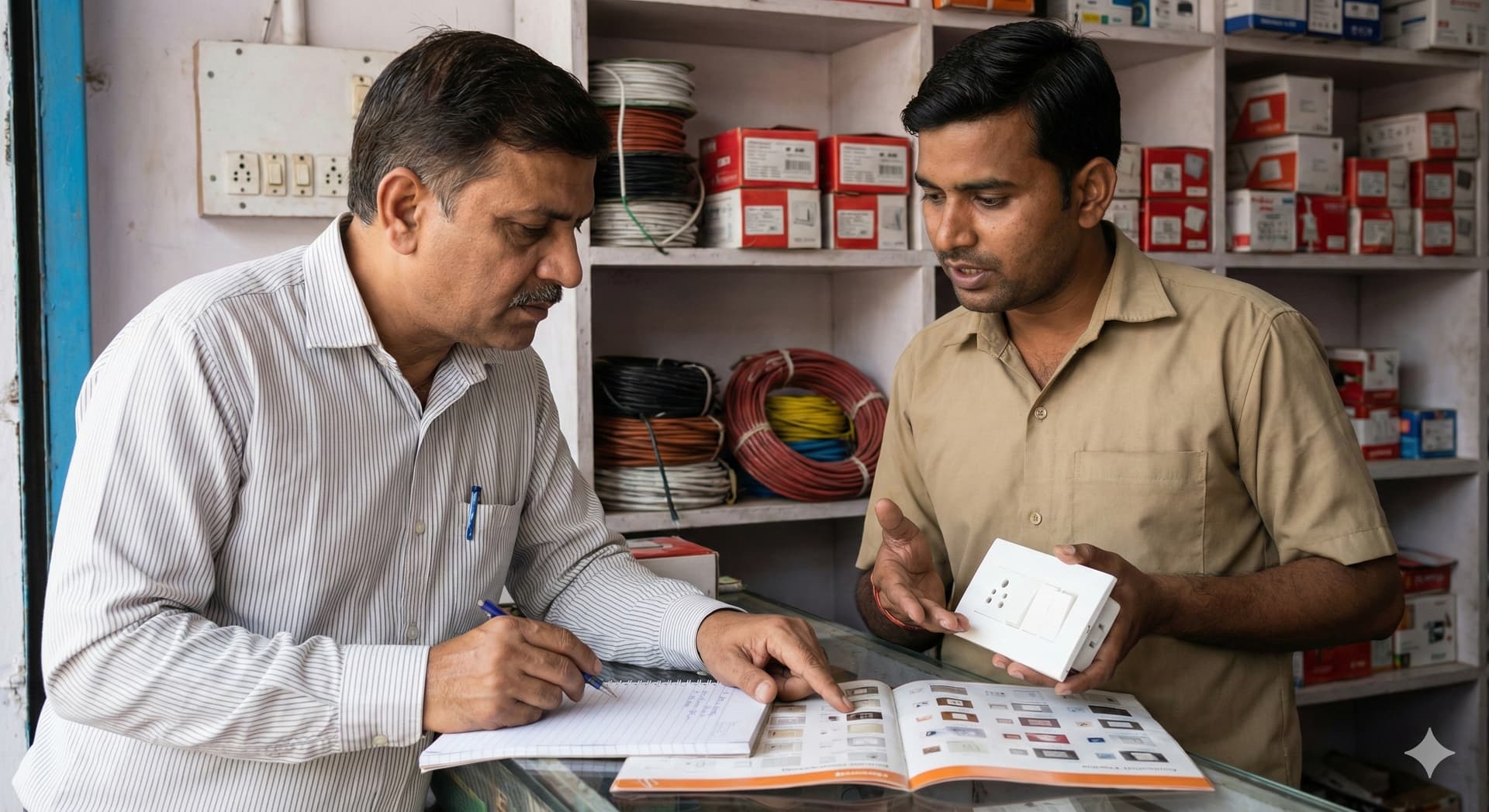
Learn the Basics Visually: You need to understand the products you are selling. For example, knowing the difference between modular and non-modular switches is crucial for stocking the right inventory for your area.
Modular Switches: Used in modern homes, easier to replace, higher margin.
Non-Modular: Used in budget housing or older buildings, lower margin but steady volume.
Youtube is Your University: Watch videos on "House Wiring Basics" or "MCB types" in Hindi. When a customer asks a technical question, you should know the answer.
3. The "Bhagirath Palace" Reality Check: Don't Get Cheated
You will likely come to Bhagirath Palace, Delhi—Asia's largest electrical market—to buy your stock. Here is the ugly truth: This market is full of sharks.
The "Duplicate" Game: You might be offered a "branded" wire bundle for ₹50 less than the standard rate. It looks real, but the copper inside is mixed with iron. When it melts in your customer's wall, your reputation dies.
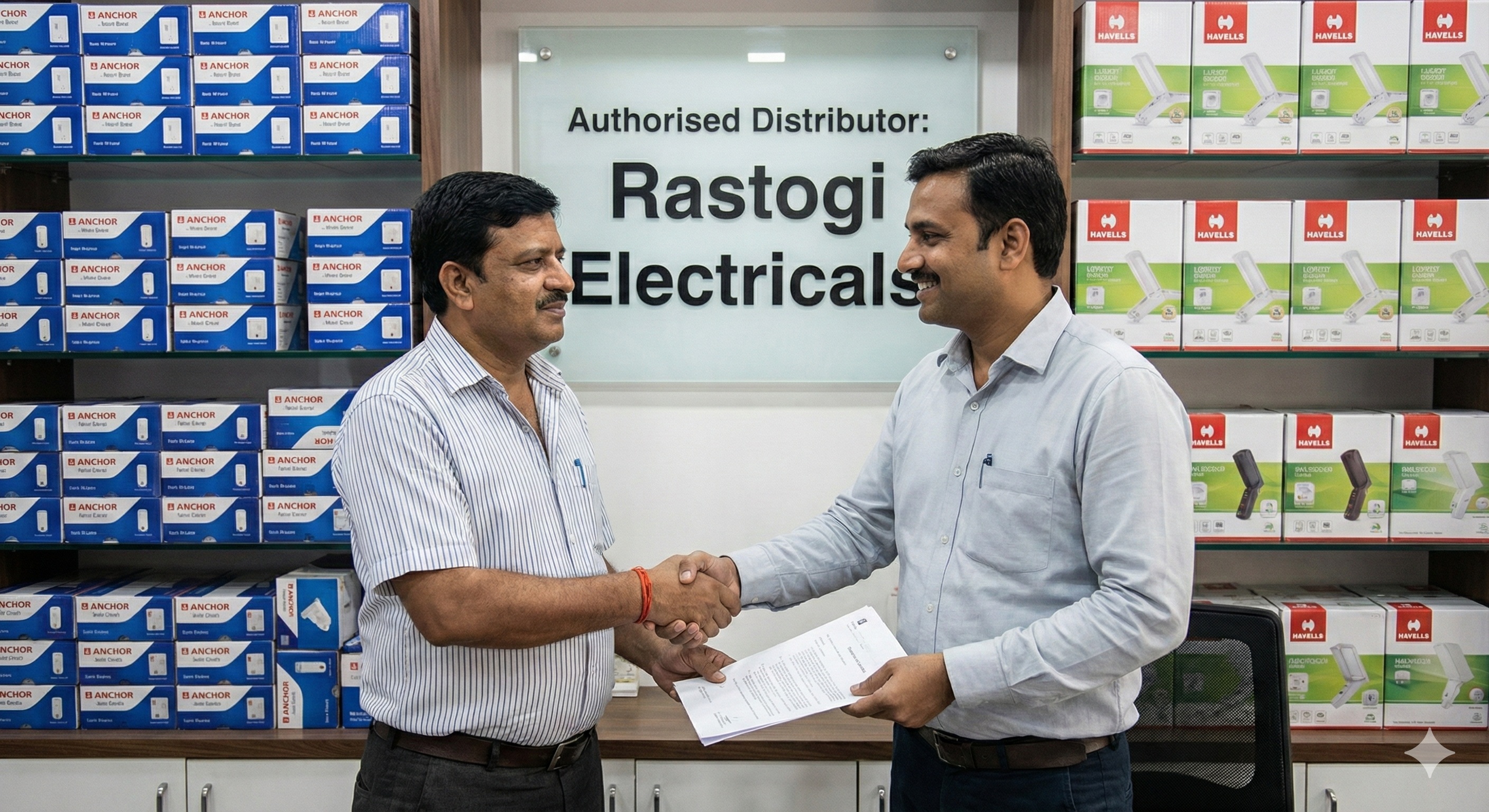
The Rastogi Difference At Rastogi Electricals, we have stood in Bhagirath Palace since 1997 for one reason:
Honesty.
100% Genuine: We only sell original products (Anchor, Havells, Polycab, GreatWhite).
Clear Quality: We tell you clearly: "This is the standard quality, and this is the heavy quality." No lies.
We are not just selling you a box; we are partnering in your success. If your shop runs, our business runs.
4. Investment: How Much Cash Do You Need?
For a standard retail counter in a Tier 3 town:
Shop Deposit/Rent: Varies by Location
Furniture/Racks: Keep it simple, minimise initial investment. Focus more on display.
Initial Stock Investment: A normal shop can be started with an investment of as little as 50,000 but the more you invest the better variety you will have - with the option of stocking more premium brands and models catering to higher end customers.
The 70-20-10 rule for stock
70% Fast Moving: Wires, Tape, Bulb Holders, LED bulbs, Accessories - 2 Pin Tops, Multiplugs, Holders etc.
20% Medium Moving: Modular Switches & Accessories (Stock one good brand like Anchor, Havells or Cona).
10% Slow Moving: Ultra-Premium or Fancy Items.
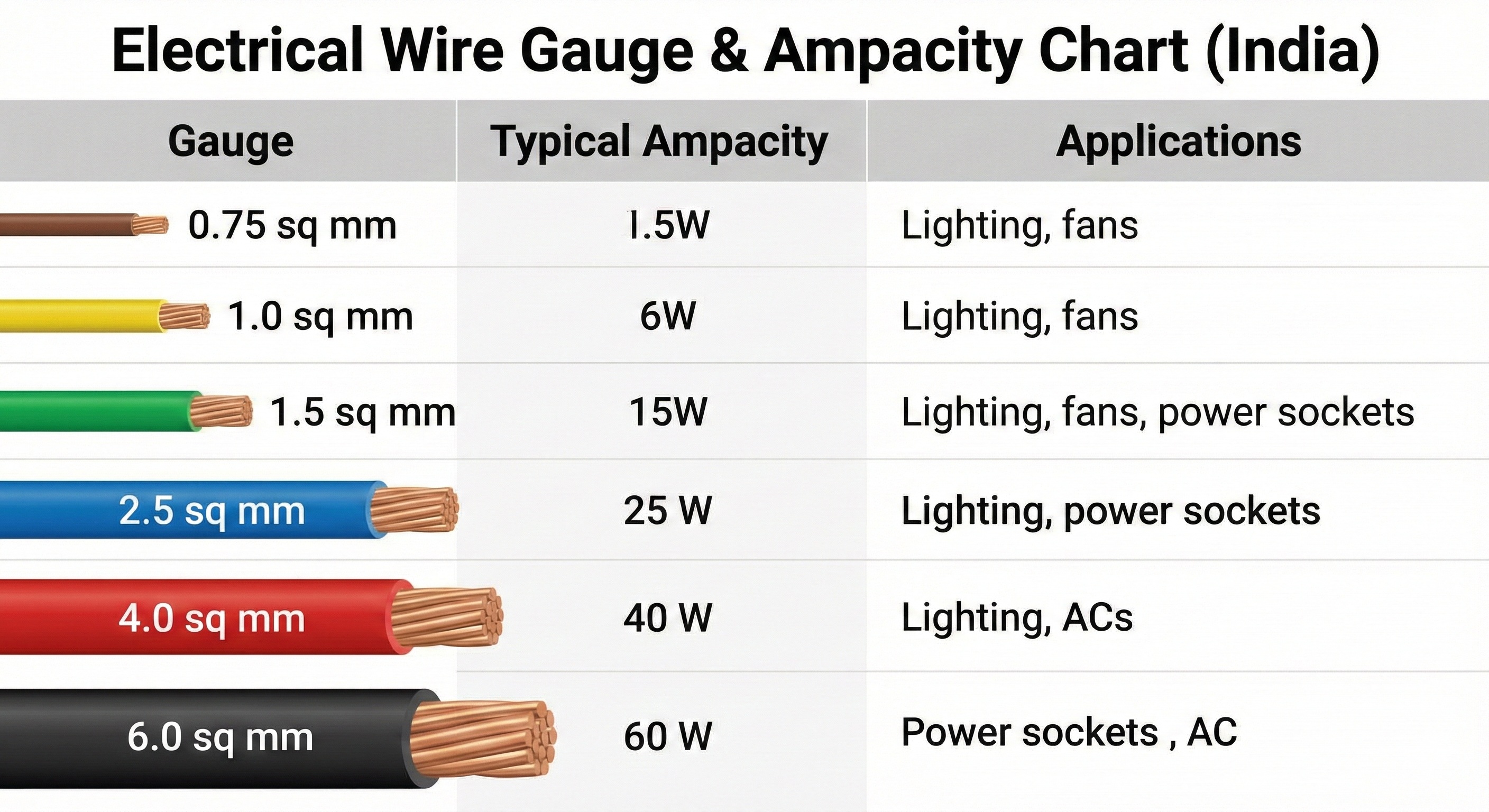
Understanding wire gauges is essential for this "Fast Moving" category. You need to know which wire thickness (gauge) is used for which appliance to advise your customers correctly.
5. How to Get Your First Customers
Treat the Electrician as King: In India, the homeowner rarely buys the wire; the electrician tells them what to buy. If you treated that local electrician well during your "learning phase," he will now become your biggest marketing channel. Offer them respect, fair dealings, and maybe a cold water bottle when they visit.
Price Transparency: In the beginning, keep your margins reasonable. If a customer trusts your price on a packet of screws, they will trust you for the ₹10,000 wire bundle.
Ready to Start?
Starting a business is scary, but you don't have to do it alone.
Come visit us at Rastogi Electricals in Bhagirath Palace. Sit down, have a chai, and let’s discuss your list. We will help you select the right "Starters Kit" for your budget—no cheating, no duplicates, just good business.
www.rastogielectricals.com